Writer: Muhammad Arif Hossain
Do you remember the days when “interview prep” meant staring at yourself in the mirror, repeating lines like “My biggest weakness is perfectionism,” until you started to believe it? Or roping in a friend to ask you a couple of questions before they got bored? Most of us did. And let’s be honest, it rarely felt like enough.
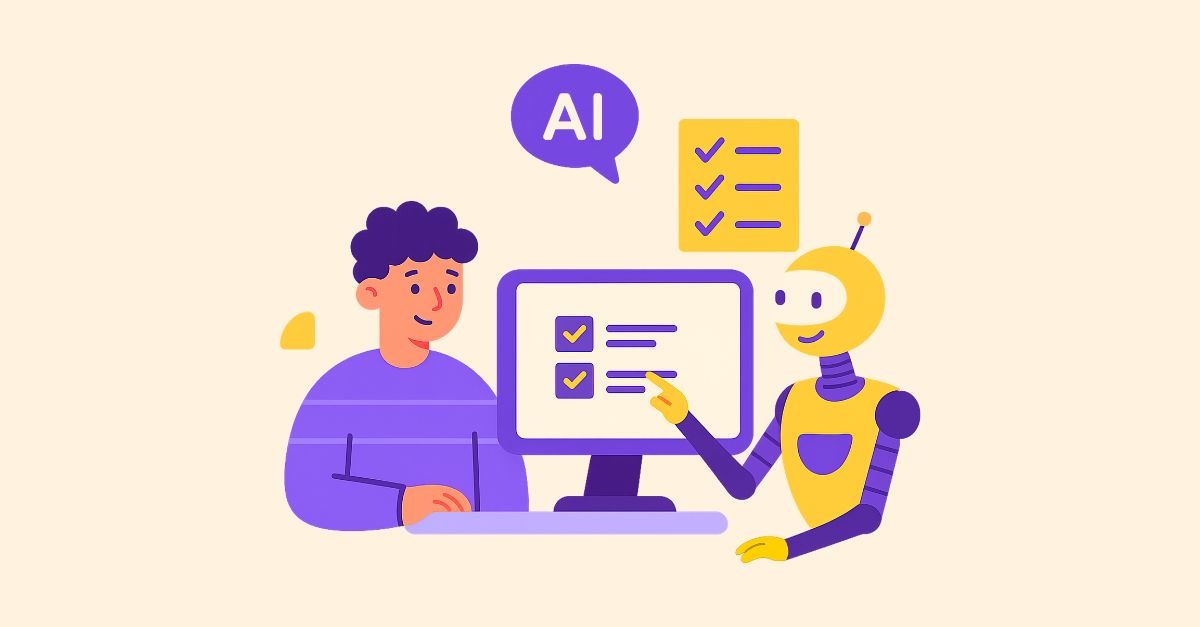
Today, you have a new practice partner. One that never gets tired, never rolls its eyes, and always has another question up its sleeve. It’s called AI. Think of it as your endlessly patient coach, available at midnight before an early morning interview, or during a lunch break when nerves creep in. The secret is not just knowing that AI exists but learning how to use it well.
Here’s how you can put AI to work for you, step by step.
Step 1: Use AI to Generate Practice Questions
Take the job description of the role you’re aiming for, copy it into an AI tool, and ask:
“Please generate 10 likely interview questions for this position, including behavioral ones.”
Within seconds, you’ll have a list of targeted questions, everything from the old standbys (“Tell me about yourself”) to more specific prompts like, “Can you describe a time when you improved a process to save costs?” This gives you a realistic starting point instead of rehearsing in the dark.
Step 2: Practice Mock Interviews with AI
Now, ask the AI to play interviewer. Something as simple as:
“Pretend you’re a hiring manager. Ask me one question at a time for this role.”
Then, answer out loud, as if you’re really in the interview. Don’t type everything, speak. The point is to practice being comfortable hearing your own voice giving answers. Some tools even allow video simulations where the AI notes your eye contact and pacing.
Remember: an interview is live, not typed. So, practice in the medium you’ll be tested in.
Step 3: Refine Your Answers with AI Feedback
When you’ve given an answer you’re unsure about, write it down and paste it back into the AI. Ask:
“Please suggest ways to make this answer clearer, more concise, and compelling.”
AI might tell you: shorten the first part, add a specific example, or make the ending stronger. It’s like having an editor for your stories. But here’s the key: don’t let AI write your story for you. Use your own experiences. Let AI help you tell them better.
Step 4: Test for Brevity and Impact
Long-winded answers can lose your interviewer. AI can help you trim them down. Try this:
“Rewrite my answer so it can be spoken in under two minutes, without losing impact.”
You’ll often discover that the heart of your story is just a sentence or two away. Practicing both the long and the short versions gives you flexibility, depending on how much time you have.
Step 5: Research the Company with AI
You’d be amazed at how much more confident you feel when you know something recent about the company. Ask AI to:
“Summarize the company’s mission, recent news, and culture in a few bullet points.”
You can then weave this into your answers: “I was particularly excited to learn that your company just launched a sustainability initiative. I’d love to contribute to projects like that.” Suddenly, you’re not just another applicant. You’re someone who cared enough to prepare.
Step 6: Spot Blind Spots
Sometimes, we don’t notice our habits. Maybe you keep saying, “I think” or “kind of.” Maybe your answers lack measurable results. AI can highlight these blind spots. Ask it:
“What weaknesses or overused phrases do you notice in my answer?”
That kind of feedback is gold; it shows you the things you’d never have caught alone.
A Gentle Reminder
With all this, don’t forget: AI is your coach, not your stand-in. It can polish your delivery, structure your thoughts, and make sure you don’t walk into the room unprepared. But it cannot, and should not, take away your most important quality: you.
Think of it this way: an interview is not a spelling test where there’s one right answer. It’s a conversation between two people, trying to discover if they want to work together. AI can help you sharpen your words, but the spark that convinces someone you belong on their team comes from your lived experiences, your way of seeing the world, and the energy you bring into the room.
Your stories matter. Your values matter. The lessons you’ve picked up through setbacks, surprises, and successes are the very things that set you apart from every other candidate who has practised the same stock answers.
So, by all means, use AI to polish. Use it to prepare. But when the interview starts, set the AI aside and let your own voice carry the day. Remember, interviews aren’t about flawless performances. They’re about authenticity, connection, and fit.
And the good news? Those are the things you already have.
Encouragement to Close
So, next time you find yourself worrying about that big interview, don’t pace the room in frustration. Open your laptop or phone, invite AI to the practice table, and get to work. With every question you rehearse, every answer you refine, every story you polish, you’re not just preparing, you’re building confidence.
And confidence, as every interviewer knows, is the one thing you can’t fake. With AI as your practice partner, you’ll walk in ready. Not perfect. Not scripted. But real, prepared, and steady.
And that’s more than enough.
Writer’s Bio
Muhammad Arif Hossain

Business Development Manager and Creative Writer with 6+ years of experience, skilled in team leadership, business analysis & development, Talent Sourcing, documentation, technology integration, and automation.